Banking Without Banks
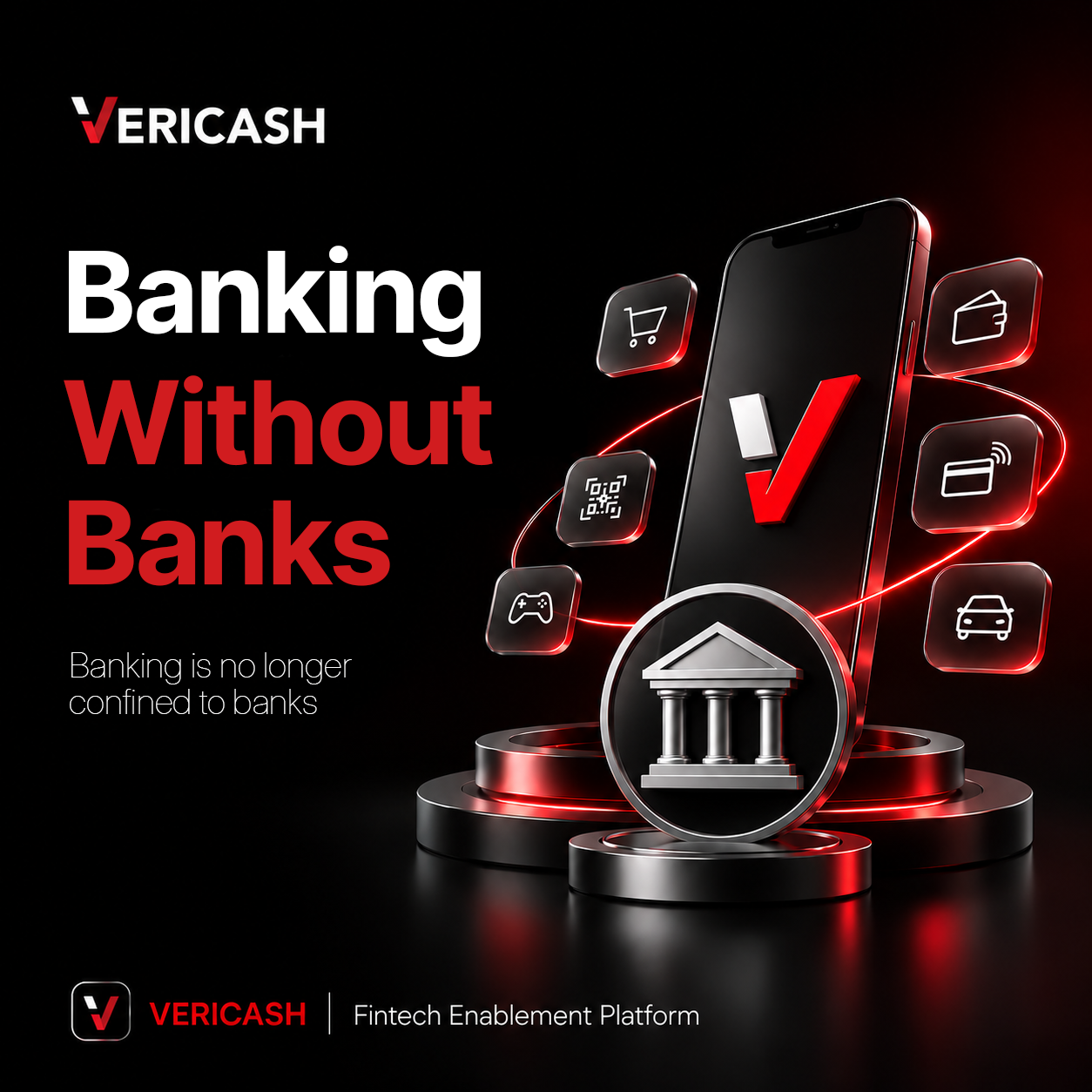
Banking Without Banks
Banking is no longer confined to banks.
Increasingly, financial services are being delivered through:
- Platforms
- Ecosystems
- Applications
- Digital marketplaces
- Embedded experiences
Customers today can:
- Make payments inside retail apps
- Access credit during checkout
- Transfer money through messaging platforms
- Manage finances without ever entering a traditional banking environment
The result is a fundamental shift in how banking is experienced.
Financial services are becoming embedded into digital ecosystems, often becoming invisible to the customer altogether.
The Shift from Institutions to Experiences
For decades, banks owned the financial relationship.
Customers interacted directly with banking institutions through branches, portals, and proprietary channels.
Today, that dynamic is changing.
The customer increasingly interacts with:
- Platforms
- Digital ecosystems
- Embedded interfaces
- Third-party applications
In many cases, the financial institution becomes the infrastructure layer operating behind the experience rather than the visible customer touchpoint.
This transition is accelerating globally. Industry models developed by platform strategist Simon Torrance estimate that embedded finance represents an addressable market opportunity exceeding $7 trillion globally by 2030. (Torrance, S. (2020). Embedded Finance: A $7 Trillion Market Opportunity. Embedded Finance & Super App Strategies.).
Banking is moving closer to the customer.
But often further away from the bank itself.
The Rise of Embedded Financial Ecosystems
The rapid growth of embedded finance is reshaping how institutions think about service delivery.
Customers no longer compare banking experiences only against other banks.
They compare them against:
- E-commerce platforms
- Ride-hailing apps
- Digital marketplaces
- Streaming services
- Real-time consumer platforms
This creates pressure for financial institutions to deliver:
- Seamless omnichannel experiences
- API-driven integrations
- Real-time personalization
- Frictionless onboarding
- Cross-platform accessibility
According to McKinsey, embedded finance is expected to become one of the most significant drivers of financial services distribution globally as customer behavior increasingly shifts toward integrated digital ecosystems (Global Banking Annual Review, 2025).
The implication is clear:
Financial services are becoming features within larger ecosystems.
Who Owns the Customer Relationship?
As banking becomes embedded, an important strategic question emerges:
Who owns the customer relationship?
Is it:
- The financial institution providing the infrastructure?
- Or the platform controlling the experience?
This is becoming one of the defining strategic questions in modern digital finance.
Because while infrastructure powers transactions, customer loyalty is increasingly shaped by:
- Experience quality
- Accessibility
- Convenience
- Ecosystem integration
Institutions that fail to adapt risk becoming invisible infrastructure providers operating behind stronger digital brands.
The Infrastructure Challenge
To remain competitive in this environment, financial institutions require infrastructure capable of supporting:
- Omnichannel banking
- Embedded services
- API ecosystems
- Multi-market scalability
- Real-time transaction processing
- Personalized customer engagement
This level of enablement cannot typically be achieved through fragmented systems or isolated digital projects.
It requires centralized, scalable infrastructure designed for ecosystem banking.
The VERICASH Perspective
At CIT VERICASH, we view this transition not as the decline of banking, but as the evolution of banking infrastructure.
Through the VERICASH Fintech Enablement Platform, financial institutions can deliver embedded, omnichannel, and ecosystem-driven financial experiences while maintaining operational control, scalability, and customer engagement.
The platform enables:
- Seamless banking across mobile, web, USSD, and agency channels
- Embedded finance integrations
- White-labeled digital experiences
- AI-powered personalization
- Centralized customer intelligence across business lines
More importantly, the model allows institutions to evolve from standalone banking channels into scalable financial ecosystems capable of supporting customers wherever they interact digitally.
In the future of finance, relevance will increasingly depend not only on owning infrastructure, but on owning the experience layer around it.
The Future of Banking Is Ecosystem-Driven
Banks are not disappearing.
But banking is changing.
The institutions that thrive in the next phase of digital finance will likely be those capable of:
- Embedding services seamlessly
- Scaling across ecosystems
- Maintaining customer relevance
- Operating through intelligent infrastructure
Because increasingly, customers may not ask:
“Which bank powers this experience?”
They may simply expect the experience to work.
And in that future, the institutions best positioned for success will be those prepared to operate wherever financial services happen.
Sources
- Accenture. Embedded Finance: Banking Everywhere (2025)
- McKinsey & Company. Global Banking Annual Review (2025)
- Deloitte. Digital Banking Consumer Trends Report (2025)




Subscribe to our Newsletter
A monthly newsletter of articles, case study, updates in the field & much more


